0%

Comprising internationally recognised experts in seagrass science, conservation, restoration, and policy, the Committee plays a central role in shaping the scientific vision of the 16th International Seagrass Biology Workshop (ISBW16).
Working in close collaboration with the Organising Committee, the Scientific Committee oversees the peer review of abstracts, shapes the scientific sessions, and supports a balanced, inclusive programme that reflects global perspectives and emerging research. Through their expertise, the Committee helps advance knowledge, foster collaboration, and contribute to the long-term resilience of seagrass ecosystems worldwide.
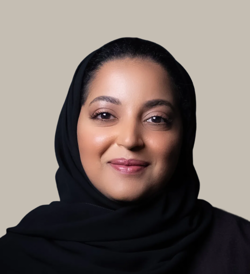
Dr Hind Al Ameri is a marine conservation scientist with more than a decade of experience advancing environmental protection and species conservation in the UAE. She joined the Environment Agency – Abu Dhabi (EAD) in 2014 and currently leads the Marine Biodiversity Assessment and Conservation Section, playing a central role in safeguarding marine biodiversity and strengthening national conservation frameworks.
Dr Al Ameri holds a PhD in Biological Sciences from the University of Exeter. Her academic and professional work focuses on the conservation of threatened marine species, particularly marine turtles and other marine megafauna, with an emphasis on translating science into effective conservation action.
Beyond her scientific work, Dr Al Ameri is deeply committed to environmental education and community engagement. She is the author of children’s books that introduce young readers to the UAE’s marine environment, aiming to inspire curiosity, awareness, and a sense of responsibility towards nature from an early age.
Throughout her career, Dr Al Ameri has contributed to national and regional conservation efforts across the Gulf, advocating for collaborative, science-led approaches to protect marine ecosystems and ensure their resilience for future generations.
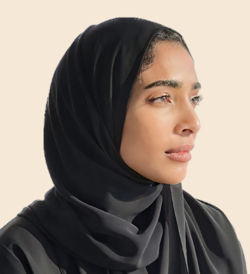
Noura is a passionate marine biologist who is committed to preserving the precious underwater ecosystems of the Arabian Gulf. Her love for the ocean stems from a childhood spent playing on the sandy shores of Abu Dhabi, and she has dedicated her life to studying and protecting the fragile underwater ecosystems of the region.
As a specialist at the Marine Biodiversity Assessment and Conservation team at EAD, Noura is on the front lines of marine conservation efforts in the UAE. Her work involves monitoring and assessing the health of coral reefs and seagrass meadows, identifying critical areas for protection, and developing strategies to restore damaged ecosystems.
But Noura's expertise goes far beyond her work at EAD. She is also a PhD candidate at Bangor University in the UK, where she is studying the complex ecology and physiology of seagrass in the southern Gulf. Her research has the potential to provide key insights into the functioning of these vital underwater ecosystems and could help inform future conservation efforts in the region.
Noura's dedication to marine conservation is apparent not just in her academic and professional work, but in her personal life as well. In her free time, she volunteers with local environmental groups and leads educational programmes for school children, helping to inspire the next generation of environmental stewards.
With her passion, dedication, and expertise, Noura is a key player in the fight to protect the precious marine ecosystems of the UAE and beyond.
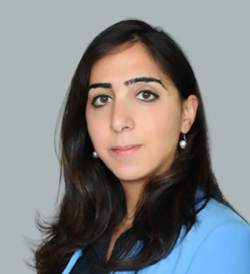
Nessrine Alzahlawi is an Expert with the Marine Biodiversity Assessment and Conservation Section at the Environment Agency Abu Dhabi. She is an aquatic ecologist and environmental policy professional, currently leading the set-up and implementation of the Abu Dhabi Mangrove Initiative within the Environment Agency Abu Dhabi.
She has over 17 years of experience in the field of nature conservation and restoration, in the UAE and internationally, having previously worked at the Secretariat of the Ramsar Convention on Wetlands and at the United Nations University Institute for Water, Environment and Health.
She holds an MSc in Aquatic Biology and Resources Management from the University of Exeter. Nessrine is passionate about science-based environmental action and communicating the value of nature and ecosystems, while involving the wider community in biodiversity conservation.
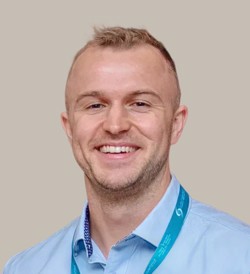
Stephen Carpenter is a conservation scientist and project manager specialising in marine and terrestrial spatial ecology and ecosystem restoration.
Based in the UAE, he leads applied research on seagrass, mangroves, and coastal habitats, combining field surveys, geospatial analysis, and emerging AI tools to assess biodiversity and blue carbon. His work focuses on translating complex environmental data into practical guidance for restoration design, marine planning, and evidence-based policy.
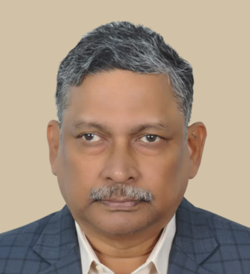
Dr. Himansu Sekhar Das is currently working as the Expert at the Marine Species and Habitat Programmes at the Environment Agency Abu Dhabi. His expertise includes marine species and habitat research including conservation, management and restoration of habitats.
Currently, he is involved in research programs that include survey and monitoring of marine mammal dugong and sea turtles of Northwestern Indian Ocean Region and mapping, characterisation and conservation of seagrass and mangrove ecosystems.
He currently holds a few voluntary positions such as regional co-chair of IUCN Sirenian Specialist Group and a member of Marine Turtle Specialist Group.
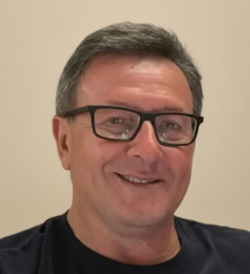
Carlos M. Duarte (Lisbon, 1960) is Ibn Sina Distinguished Professor of Marine Science at the King Abdullah University of Science and Technology (KAUST), in Saudi Arabia, and CEO of the Global Coral R&D Accelerator Platform. Duarte was Director of the Oceans Institute at The University of Western Australia and held positions in Spain, Norway and Denmark. Duarte’s research addresses the effects of global change on marine ecosystems and the development of ocean-based solutions to global challenges. He developed evidence-based strategies to rebuild the abundance of marine life by 2050, and leads efforts to solve the coral reef crisis. Building on his research showing mangroves, seagrasses and salt-marshes to be globally-relevant carbon sinks, he developed, working with different UN agencies, the concept of Blue Carbon as a nature-based solution to climate change. His research, across all oceans, depths, organisms and ecosystem types, has led to more than 1.100 scientific papers. Duarte is ranked as the top marine biologist and the 12th most influential climate scientist worldwide (Reuters), and has received multiple accolades. On April 16 2025, he was presented by the Emperor of Japan with the Japan Prize 2025 for his “contribution to our understanding of marine ecosystem in a changing earth, especially through pioneering research on Blue Carbon”. He serves as Chief Scientist at E1 and is heavily involved with sustainability in sports.
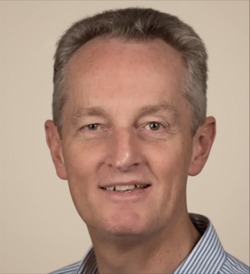
Paul graduated in 1993 with a PhD in Marine Ecology from the Radboud University in Nijmegen, The Netherlands. He has worked for >30 years as an applied scientist and consultant focusing on the conservation, impact prevention and restoration of critical marine and coastal ecosystems worldwide, including the Arabian Gulf and Red Sea region. In recent years he has been actively involved in multiple seagrass and mangrove restoration projects in the Arabian region and Southeast Asia. Paul is based in Perth, Australia, where he is a Research Fellow at the University of Western Australia and operates his own independent consultancy firm, DAMCO Consulting. Having served as independent reviewer of several large science programs, supervised MSc and PhD students, published over a hundred scientific papers and with a strong affinity for the Arabian region, Paul is well-placed to serve on the scientific committee for ISBW-16 in Abu Dhabi (UAE).
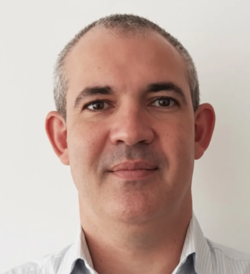
Gabriel Grimsditch is a Programme Management Officer and marine ecosystems expert with the United Nations Environment Programme based at the headquarters in Nairobi, Kenya. He has over 20 years of experience working on the conservation of coral reefs, mangroves and seagrass ecosystems, and he currently leads Monitoring & Evaluation for the Global Fund for Coral Reefs.
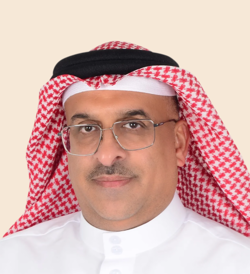
Abdulqader Khamis holds a PhD in Dugong–Seagrass Interactions from the University of Barcelona, an MSc in Marine Environmental Protection from the University of Wales, Bangor, and a BSc in Biology–Education from the University of Bahrain.
He has more than 20 years of multidisciplinary experience in the environmental protection field, with a focus on biodiversity conservation management, environmental policy and regulation, environmental monitoring and compliance, strategic and environmental impact assessment, as well as environmental multilateral agreements.
His research interests revolve around seagrass and dugong ecology and conservation in the Arabian Gulf and Red Sea, mangrove transplanting and restoration, coral reef bleaching, anthropogenic stresses on macrobenthic communities, seabird breeding populations, and protected area planning and management.
Abdulqader has published a number of peer-reviewed articles, participated in regional scientific expeditions conducted in the Arabian Gulf, Red Sea, and Indian Ocean, and contributed to top-tier documentaries showcasing the seagrasses and dugongs of the Arabian Gulf and Red Sea.
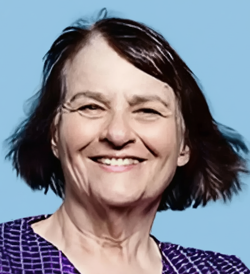
Helene Marsh is a marine conservation biologist with more than 50 years’ experience in research into species conservation, management and policy with particular reference to tropical coastal and riverine megafauna and their habitats.
Her contributions have been recognised with an Order of Australia and prestigious awards from the Pew Foundation, the Society for Conservation Biology, the American Society of Mammalogists and the Australian Marine Science Association. She is immediate past Vice-President and Secretary Biological Sciences of the Australian Academy of Science and a fellow of the Australian Academy of Technological Sciences and Engineering, the Queensland Academy of Arts and Sciences and the Royal Zoological Society of NSW. She was awarded the title of Distinguished Professor by JCU in 2010.
The policy outcomes of her research include significant contributions to the science base of the conservation of coastal marine mammals and their habitats, especially dugongs and green turtles and their seagrass habitats. In 2025, she lead an international team of 70 experts to produce “ A global assessment of Dugong Status and Conservation Needs”, a 350 page report published by the Convention on the Conservation of Migratory Species. The report confirms the overwhelming importance of seagrass habitats for dugongs and emphasizes the need for additional seagrass mapping
Helene has been a key member of the technical advisory groups that have advised the Australian and Queensland governments on the Great Barrier Reef for many years including: chairing the statutory Great Barrier Reef Consultative Committee (1989-2000), being a member of the Reef Advisory Committee for Conservation (2001-2009), and the Independent Expert Panel which provides strategic advice on the implementation of the Reef 2050 Plan (2015-24).
Helene is most proud of the accomplishments of the almost 100 Honours, Masters and PhD students that she has supervised to graduation, who are making a difference all over the world.
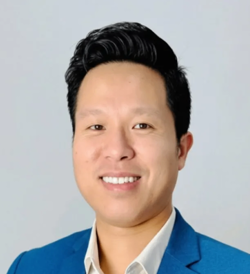
Dr Hung Manh Nguyen is a marine ecologist with a deep passion for seagrasses. His research philosophy is anchored in three pillars: Exploration, Protection, and Application.
His exploration uses seagrasses as a model system to uncover fundamental ecological principles governing plant-environment dynamics, particularly in the face of accelerating environmental change. This foundational knowledge directly informs the protection pillar, where he develops and advocates for evidence-based conservation frameworks to improve the efficacy and sustainability of seagrass management, resilience-building, and restoration. Ultimately, seeking to apply these insights, harnessing the power of seagrass ecosystems as indispensable tools for climate change mitigation, coastal protection, and addressing broader global challenges.
He is currently serving as a Senior Researcher at the Yas SeaWorld Research & Rescue Center, Yas Island, Abu Dhabi, UAE. In this role, he has the privilege of leading the center’s seagrass research programme. His mission is to advance the scientific frontier in this region, cultivate strategic partnerships, and contribute meaningfully to securing the health and future of seagrass ecosystems in Abu Dhabi's waters and across the globe.
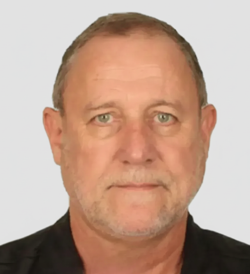
Dr Nicolas Pilcher is the Executive Director of the Marine Research Foundation, Malaysia’s first marine-oriented NGO. Among MRF’s flagship projects are introducing Turtle Excluder Devices to Malaysian trawl fisheries; being an implementing partner for the CMS IKI Dugong & Seagrass project; and developing solutions for shark and ray bycatch in Malaysia. In recent years Nick has also studied impacts of climate change on sea turtles in SE Asian and the Arabian Gulf, overseen a global dugong bycatch and directed take assessment, and designed time-area closures to save endangered sharks and rays in Malaysia.
Nick has worked extensively on marine conservation projects, focusing on the ecology of endangered sea turtles, dugongs, sharks and rays, whales, and other large charismatic marine species. Nick also works extensively with major industries to design and deliver solutions to environmental challenges they face. His specialty is in developing management-oriented solutions to conservation and working on reducing bycatch of endangered species, to which he brings ‘a few’ years of experience.
He served as the director of the marine conservation for the government of Saudi Arabia between 2021 and 2023 and has worked all over SE Asia, the Pacific region and over in the Middle East. Nick is a technical advisor to both the CMS-UNEP dugong and turtle MoUs, and also to WWF’s global marine turtle programme, and sits on a Marine Turtle Expert Panel on behalf of Chevron and the Western Australia Minister of Environment. He served as the Co-Chair of the IUCN Marine Turtle Specialist Group for 13 years, and is a member of the marine turtle and sirenian specialist groups today.
In his spare time, he is a husband, a father, diver, a boat captain, and even a small airplane pilot.
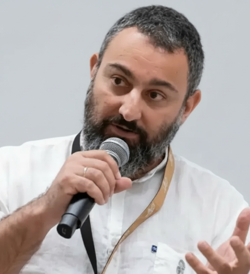
Dimitris Poursanidis, Ph.D. is a marine scientist and Earth observation analyst specialising in the monitoring, mapping, and assessment of seagrass ecosystems at local to global scales. His research focuses on leveraging satellite- and drone-based remote sensing, combined with field data, to improve our understanding of seagrass distribution, condition, resilience, and ecosystem services under increasing environmental and anthropogenic pressures.
He is a Technical Scientist at the Foundation for Research and Technology – Hellas (FORTH) and an active contributor to international ocean observing and seagrass initiatives. Dimitris is a member of the UNESCO Global Ocean Observing System (GOOS) Biodiversity and Ecosystems Panel, where he co-leads the Seagrass Essential Ocean Variable (EOV), supporting the development of standardised, scalable seagrass monitoring frameworks relevant to policy, management, and global reporting. He is also a member of the UN/CMS 2030 Seagrass Breakthrough and the Mediterranean Posidonia Network.
Dimitris has authored more than 60 peer-reviewed scientific publications, with a strong emphasis on Earth observation–driven seagrass mapping, long-term monitoring, restoration support, and blue carbon assessments. He is actively engaged in translating scientific outputs into operational tools and visual products, including underwater multimedia, to support decision-making, capacity building, and stakeholder engagement in seagrass conservation.
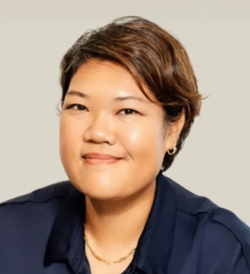
Dr Siti Maryam Yaakub is the Senior Director of the International Blue Carbon Institute at Conservation International. She leads the institute's global efforts in translating blue carbon science into tools and methodologies for climate mitigation and adaptation. In addition, she spearheads initiatives aimed at fostering multidisciplinary expertise in blue carbon and cultivating a resource hub for knowledge exchange.
Dr Siti is a marine ecologist and works across tropical marine and coastal habitats. Her work and research interests broadly lie in the areas of ecosystem restoration and nature-based solutions for adaptation and mitigation in marine environments. Within this, she is specifically interested in using seagrass habitats as a model system for understanding ecological thresholds to stress, ecosystem resilience, and the effects of human activities and climate change on the marine environment.
Dr Siti read marine biology as an undergraduate at James Cook University in North Queensland, Australia, where she graduated with a First Class Honours degree in 2005. She graduated with a PhD in Biological Sciences from the National University of Singapore in 2014, with a research thesis on seagrass resilience to anthropogenic stressors, that was a joint collaboration with the Royal Netherlands Institute of Sea Research (NIOZ). Her prior appointments include Senior Biodiversity Manager (Marine) with the National Parks Board from 2007 and 2009, and several appointments including Head of Department for Sustainability and Climate Solutions with DHI Group between 2014 and 2023.
Dr Siti has been showcased by numerous publications for her environmental work, including on the Harper’s Bazaar Power List of Sustainability Champions in 2021 and as one of The Singapore Women’s Weekly’s Great Women of Our Time in 2022.
In her spare time, she monitors seagrass habitats around Singapore with TeamSeaGrass, a citizen science volunteer group that she co-founded in 2007, and plays on a doubles team in a recreational women’s tennis league in Singapore.